Quantum Chromodynamics

Mustermark...?
Mustermark... where did that come from? The answer to that takes us down an unlikely rabbit hole of physics and literature...
When I was 10, in 1973, my dad bought an encyclopedia in several volumes. I must have read the last volume on science from cover to cover. The last part was on sub-atomic particles, ending with the theory of Quantum Chromo-Dynamics. QCD was proposed by physicist Murray Gell-Mann and in a short paper published in February 1964 he coined the term Quark for the first time. Incidentally, Gell-Mann was born in the same year as my dad, 1929.
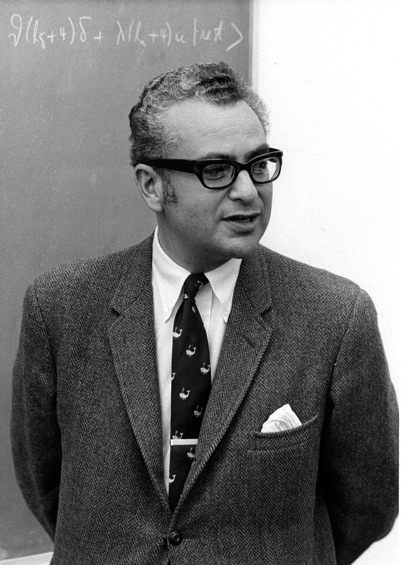
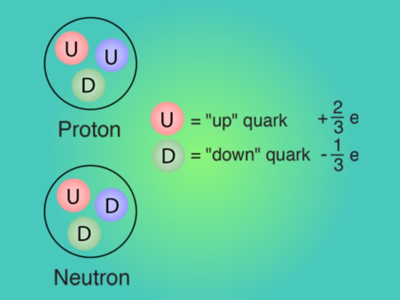
Quantum Chromo-Dynamics… The name alone sends tingles down your spine, right? Not only are atoms (Greek meaning is indivisible!) made of protons and neutrons (which I already knew aged 10), but they in turn are made up of what Gell-Mann called quarks. Quarks are held together by gluons.
A 10-year-old’s imagination was on fire, with plans to become a particle physicist who would discover the first evidence of the existence of quarks.
But where did Gell-Mann get the word Quark from? A rather odd poem called Finnegan’s Wake by Irish poet James Joyce was a favorite of Gell-Mann. In the poem is the line “Three quarks for Mustermark.” And Gell-Mann coined the term quark for his new particles. Now, in the poem, Mustermark is a philanderer and all-round cad, and a quark was like a squawk or a telling-off, but I decided to adopt Mustermark anyway and registered the domain mustermark.com.
Quarks have different flavors:
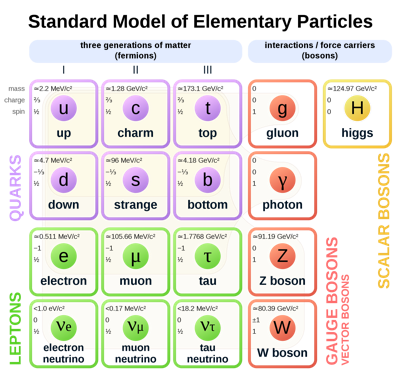
Originally, Top and Bottom were proposed as Truth and Beauty; far more poetic... but not all physicists appreciate the poetic like Gell-Mann did, and Top and Bottom prevailed.
Alas, I discovered that my math was not good enough to go into the field of particle physics, but then, in 1978, a heartbroken teenager saw a TV show on BBC; a Royal Institute Christmas Lecture.
The Christmas Lectures were a wonderful series each year that presented science in a fascinating way... Eric Laithwaite in 1974 presenting ‘The Engineer Through the Looking-Glass’, Carl Sagan in 1977 with ‘The Planets’...
and then in 1978 Christopher Zeeman presented ‘Mathematics into Pictures’. On the show Sir Christopher had a huge model of DNA (like the one I now have) built from Molymods, and I decided then and there that I would find out how it worked.
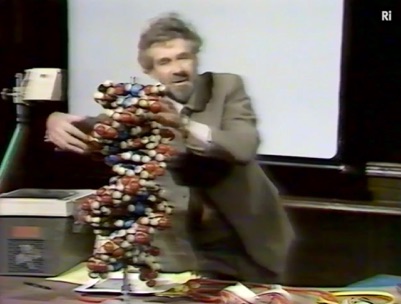
And that’s how I ended up in biotech; the rest, as they say, is history.
Yours most geekily,
(Muster)Mark.
Saturday, February 1, 1964